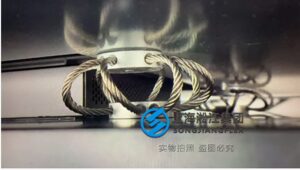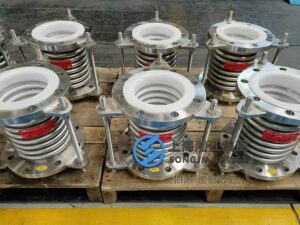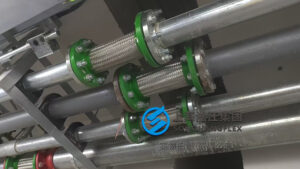
Another batch of Air Damping Vibration Isolators has been completed for shipment to a customer in South Korea, providing a practical vibration control solution for sensitive industrial and precision equipment.
As manufacturing, inspection, semiconductor, optical, and laboratory equipment becomes increasingly precise, controlling unwanted vibration becomes more important. A vibration level that may have little influence on conventional machinery can affect the performance of sensitive measuring instruments, optical systems, sensors, electronic components, and precision mechanical assemblies.
Air damping vibration isolation provides a compact solution by combining elastic support with damping, helping separate sensitive equipment from vibration generated by floors, machinery, transportation systems, and surrounding mechanical sources.
Why Is Vibration Control Important for Precision Equipment?
Precision equipment may be exposed to two main types of vibration.
The first is internally generated vibration, which can come from motors, cooling fans, pumps, spindles, compressors, moving stages, and other components inside the equipment.
The second is external vibration, which may come from nearby CNC machines, stamping equipment, HVAC systems, compressors, pumps, elevators, forklifts, building structures, or passing vehicles.
For precision manufacturing and measurement equipment, uncontrolled vibration can potentially affect:
- Measurement repeatability
- Surface finish
- Optical alignment
- Positioning accuracy
- Sensor stability
- Image quality
- Inspection consistency
- Electronic component reliability
- Precision machining performance
Therefore, vibration isolation should be considered as part of the complete machine design rather than only after vibration problems occur.
Applications in Precision Measuring Equipment
Air damping vibration isolators can be considered for a wide range of precision metrology and inspection systems, including:
- Coordinate Measuring Machines (CMM)
- Optical measuring machines
- Vision measurement systems
- Surface roughness testers
- Roundness measuring machines
- Contour measuring instruments
- Laser interferometers
- Precision dimensional inspection systems
- Automated Optical Inspection (AOI) equipment
- 3D scanning systems
- Precision calibration instruments
- Electronic measuring platforms
- Laboratory weighing systems
- Optical inspection benches
These systems often require stable operating conditions because the measurement itself may involve micron-level or even smaller displacement changes.
Reducing floor-borne vibration can therefore contribute to a more stable measurement environment.
Applications in Semiconductor and Electronics Manufacturing
Semiconductor and electronics manufacturing is another field where vibration control can be important.
Potential applications include:
- Wafer inspection equipment
- Wafer measurement systems
- Wafer probing equipment
- Wafer grinding machines
- Wafer polishing equipment
- Semiconductor inspection platforms
- Automated optical inspection systems
- Precision dispensing equipment
- Electronic component inspection machines
- PCB inspection systems
- Laser marking systems
- Precision positioning stages
- Microelectronic assembly equipment
Air-based vibration isolation systems are widely associated with precision applications because they can provide relatively low natural frequencies while supporting sensitive equipment.
The final isolator selection, however, should always be based on actual equipment weight, mounting arrangement, operating frequency, required stability, and environmental conditions.
Precision Machining Equipment
Air damping vibration isolators may also be applied to selected precision machine tools.
Examples include:
- Ultra-precision lathes
- Diamond turning machines
- Precision CNC machining centers
- Jig grinding machines
- Surface grinding machines
- Cylindrical grinding machines
- Gear grinding machines
- Precision boring machines
- Optical component machining equipment
- Ultra-precision polishing machines
- Precision milling equipment
- High-accuracy positioning platforms
In precision machining, vibration from the surrounding floor or from auxiliary equipment may influence the machining process.
For applications such as diamond turning, optical component processing, precision grinding, and micro-machining, the vibration isolation system should be considered together with machine rigidity, center of gravity, foundation conditions, spindle speed, and dynamic loads.
Optical and Laser Equipment Applications
Optical systems can be particularly sensitive to small movements.
Suitable application areas may include:
- Laser measurement equipment
- Optical inspection systems
- Optical microscopes
- Laser interferometers
- Imaging platforms
- Precision camera systems
- Optical alignment systems
- Spectroscopy equipment
- Laser scanning systems
- Optical testing benches
- Lens inspection equipment
- Optical component measuring machines
When selecting an isolator for optical equipment, it is important to evaluate not only vertical vibration but also lateral stability and the location of the equipment’s center of gravity.
Tall equipment with a high center of gravity may require additional attention to rocking and lateral movement.
Laboratory and Scientific Equipment
Laboratory environments contain many instruments that can be influenced by structural vibration.
Examples include:
- Analytical balances
- Precision scales
- Microscopes
- Material testing instruments
- Sensor calibration systems
- Laboratory optical tables
- Precision force measurement equipment
- Dimensional calibration systems
- Research instrumentation
- Data acquisition equipment
- High-sensitivity monitoring instruments
Vibration can enter a laboratory through building floors, HVAC equipment, mechanical rooms, elevators, pedestrian traffic, or nearby production machinery.
Installing a properly selected vibration isolation system can help reduce the amount of structural vibration transmitted to sensitive instruments.
Why Does Natural Frequency Matter?
One of the most important concepts in vibration isolation is the relationship between the excitation frequency and the natural frequency of the isolation system.
An isolator does not simply absorb every vibration regardless of frequency.
The supported equipment and isolators form a dynamic system. Effective isolation generally occurs when the excitation frequency is sufficiently higher than the natural frequency of the isolated system.
This is why low natural frequency vibration isolation is important for many precision applications.
At the same time, damping helps control excessive motion around resonance.
Therefore, selecting an isolator involves balancing load capacity, stiffness, natural frequency, damping, stability, and allowable movement.
Why Is Mounting-Point Load More Important Than Total Weight?
Suppose a precision inspection machine weighs 80 kg and uses four vibration isolators.
It might be tempting to select four isolators rated for 20 kg each.
However, this assumes perfectly uniform weight distribution.
In reality, one side of the machine may contain a heavy optical assembly, transformer, servo motor, granite base component, power supply, or moving stage.
The actual loads could therefore be 12 kg, 18 kg, 22 kg, and 28 kg instead of four equal 20 kg loads.
Selecting isolators according to actual point load distribution helps ensure that every isolator operates within a suitable working range.
Air Damping Isolators for Transportation Protection
Air-based vibration isolation is also relevant to the transportation of precision equipment.
Sensitive machines can experience random vibration and repeated shock during road or railway transportation. Research into air-spring isolation systems for precision equipment transportation has demonstrated the importance of combining vertical isolation performance with lateral stability.
Potential transportation applications include:
- Semiconductor manufacturing equipment
- Precision optical machines
- Laboratory instruments
- Satellite electronic equipment
- High-value measuring machines
- Precision calibration equipment
- Sensitive electronic cabinets
- Scientific research instruments
For transportation applications, engineers should consider road vibration, impact, equipment restraint, center of gravity, lateral movement, and maximum allowable displacement.
What Should Engineers Consider Before Selection?
A good vibration isolation solution starts with understanding the machine rather than simply selecting a mount from a catalog.
Important parameters include:
Equipment weight: Determines the basic required load capacity.
Load per mounting point: Helps ensure each isolator operates within its suitable range.
Excitation frequency: Motor RPM, spindle speed, fan speed, compressor frequency, or measured floor vibration data can help determine the vibration source.
Center of gravity: Important for equipment stability and load distribution.
Mounting arrangement: Three-point, four-point, or multi-point installations behave differently.
Installation space: Sufficient clearance must be maintained for isolator movement.
Operating environment: Temperature, contamination, oil exposure, humidity, and other environmental conditions should be considered.
Shock conditions: Mobile and transportation applications may require additional protection against transient impact.
FAQ
Are Air Damping Vibration Isolators suitable for precision measuring machines?
They can be suitable for many precision measuring systems when correctly selected. CMMs, optical measuring systems, dimensional inspection equipment, surface measuring instruments, laser measurement systems, and calibration platforms may all be sensitive to floor-borne vibration. The final selection should be based on equipment weight, mounting-point loads, required isolation frequency, center of gravity, and the actual vibration environment.
Can these isolators be used for semiconductor equipment?
Potentially, yes. Semiconductor equipment such as wafer inspection machines, wafer measurement systems, probing equipment, precision positioning systems, and optical inspection machines often require vibration-controlled environments. However, semiconductor applications can have very strict vibration specifications, so engineers should verify the required vibration criteria and compare them with the isolator’s tested dynamic performance before final selection.
Can Air Damping Vibration Isolators be used under optical equipment?
Yes, provided the isolator is properly matched to the equipment. Optical instruments can be sensitive to small vertical, lateral, and angular movements. In addition to vertical load, engineers should consider the height of the center of gravity, lateral stiffness, mounting geometry, and external disturbance frequency. For tall optical equipment, lateral stability may be just as important as vertical vibration isolation.
What causes poor vibration isolation performance?
Several factors can reduce performance. Common examples include selecting an isolator that is too stiff, operating far below or above the recommended load range, uneven load distribution, insufficient movement clearance, rigid pipes or cables bypassing the isolators, incorrect mounting, or choosing a system without considering the excitation frequency. Even a high-quality isolator cannot provide optimum performance if the overall installation creates a rigid vibration transmission path around it.
Should all four isolators have the same load rating?
Not necessarily. If the equipment has a nearly symmetrical center of gravity, using the same model at each point can simplify installation. However, machines with strongly uneven weight distribution may require different load capacities at different mounting positions. The best approach is to calculate or measure the actual reaction load at each support point before making the final selection.
What information should I send for an engineering recommendation?
Ideally, provide the total machine weight, dimensions, center-of-gravity location, number and coordinates of mounting points, operating speed or vibration frequency, installation environment, maximum available isolator height, and any known shock or vibration requirements. Equipment drawings and photographs are also very useful. With more complete input data, engineers can evaluate point loads, installation geometry, and isolator operating range more accurately.
Contact Us
Our company’s new website is now live, featuring the latest product introductions. For more details, please visit https://shsjflex.com/
[email protected]