Installing vibration isolators on a vessel is different from installing ordinary industrial anti-vibration mounts on a factory floor.
A ship is constantly exposed to vibration generated by propulsion machinery, diesel engines, generator sets, pumps, compressors, ventilation systems, and rotating equipment, while wave motion and structural vibration can introduce additional multidirectional excitation.
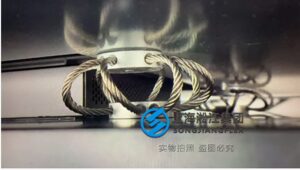
At this shipboard installation site, stainless steel wire rope isolators were used to create a flexible connection between the marine equipment and its supporting structure, helping protect the equipment from continuous vibration and mechanical shock.
What Happens at a Shipboard Installation Site?
Before installation, the equipment weight and mounting arrangement should first be confirmed.
For a typical marine electrical cabinet, navigation unit, communication rack, or monitoring cabinet, multiple wire rope isolators are positioned underneath or around the equipment according to the calculated load distribution.
The basic installation arrangement is:
Ship Structure → Wire Rope Isolator → Equipment Base → Protected Equipment
When the hull or deck vibrates, the isolator deforms before the full vibration input reaches the protected equipment.
Because wire rope isolators provide both elastic deformation and frictional damping, they are particularly useful where the equipment must withstand a combination of continuous vibration and occasional shock.
Which Marine Equipment Needs Shock and Vibration Protection?
Sensitive onboard equipment is an important application category.
Typical installations include:
Navigation Equipment
gyrocompass control units, inertial navigation systems, GNSS/GPS receivers, electronic chart systems, navigation computers, autopilot control units, voyage data recorders, and bridge electronic equipment.
Radar and Communication Systems
marine radar processing units, radar control cabinets, antenna control electronics, radio communication racks, satellite communication terminals, communication power supplies, network cabinets, and signal-processing equipment.
Electrical and Automation Equipment
main and auxiliary switchboards, distribution cabinets, PLC cabinets, frequency converter cabinets, motor control centers, UPS systems, battery cabinets, automation control cabinets, monitoring panels, and power electronic modules.
Wire rope isolators are a recognized solution for shipboard electronics, electronic cabinets, communication equipment, and navigation systems.
Marine Auxiliary Machinery
Applications can also include small pumps, motors, generators, compressors, auxiliary power units, ventilation equipment, and other rotating machinery when the isolator is correctly sized for the load and operating conditions.
Why Is Multi-Axis Isolation Important on a Vessel?
Factory machinery often has a dominant vertical vibration direction. A vessel is more complicated.
Shipboard equipment can experience:
- vertical vibration
- longitudinal vibration
- transverse vibration
- rolling motion
- pitching motion
- acceleration and deceleration
- transient mechanical shock
For this reason, marine equipment protection cannot always focus only on vertical static load.
The flexibility of a wire rope isolator allows deformation in multiple directions, while friction between the individual strands provides inherent damping.
This makes wire rope technology particularly suitable for multi-axis shock and vibration isolation.
Installation of Wire Rope Isolators for Electrical Cabinets
For a floor-mounted electrical cabinet, the isolators can be arranged between the bottom frame and the deck foundation.
For wall-mounted equipment, the loading direction changes significantly. The isolator must therefore be selected according to the actual mounting orientation rather than simply using the same model selected for vertical compression.
A published marine installation case involving a wall-mounted electrical cabinet identified propulsion systems, diesel generators, pumps, rotating machinery, hull vibration, and navigation shock as important vibration sources.
For tall electrical cabinets, engineers should additionally evaluate:
cabinet center of gravity, overturning moment, lateral displacement, cable connections, mounting bracket strength, bolt strength, and allowable isolator movement.
Installation Around Radar and Navigation Electronics
Radar, navigation, and communication electronics can contain sensitive circuit boards, connectors, displays, processors, sensors, and electronic modules.
Installing a wire rope isolation system between these devices and the vessel structure can reduce the mechanical energy transmitted through the mounting points.
Typical protected equipment may include radar processors, navigation computers, sonar electronics, communication servers, monitoring displays, gyro systems, and control electronics.
For such equipment, model selection should focus not only on static weight but also on the allowable acceleration transmitted to the protected device during shock events.
Why Use an All-Metal Isolator at Sea?
Marine environments can expose equipment to humidity, salt spray, oil, temperature variation, and long service periods.
Wire rope isolators are based on an all-metal construction rather than a conventional rubber spring element. Depending on the material configuration, stainless steel wire rope provides strong environmental resistance and avoids many conventional elastomer aging concerns.
This is particularly useful for equipment installed in engine rooms, machinery spaces, equipment compartments, control rooms, navigation areas, and exposed marine environments.
Installation Details Matter
Even a high-performance isolator will not provide the expected result if it is installed incorrectly.
Before installation, check that:
- each isolator carries the intended load;
- the mounting surfaces are flat and structurally adequate;
- bolt positions match the isolator;
- the isolator has sufficient clearance for movement;
- connected cables and pipes do not create unintended rigid bypasses;
- the equipment center of gravity has been considered;
- installation orientation matches the design;
- no isolator is excessively preloaded or twisted.
After installation, all mounting points should be inspected before the equipment is placed into service.
FAQ
1. How many wire rope isolators should be installed under one piece of marine equipment?
There is no fixed number for every installation.
Four mounting points are common for small rectangular equipment, but larger cabinets, long equipment frames, heavy electronic racks, or irregular structures may require six, eight, or more isolators.
The correct quantity depends on the total equipment weight, center of gravity, frame rigidity, mounting dimensions, individual isolator capacity, shock requirement, and available installation positions.
Simply dividing the total weight by four is not always accurate. If the center of gravity is offset, one side may carry substantially more load than the other. Providing the equipment drawing allows the mounting-point loads to be evaluated more accurately.
2. Can the same wire rope isolator be installed vertically and horizontally?
Not automatically.
Wire rope isolators can have different stiffness and load-deflection characteristics depending on the loading direction and installation orientation.
For example, an isolator operating primarily in compression under a floor-mounted cabinet may behave differently when installed on the rear of a wall-mounted cabinet.
Therefore, customers should clearly identify whether the equipment is floor-mounted, wall-mounted, ceiling-mounted, suspended, or installed at an angle. The actual load direction must be considered during model selection.
3. Are wire rope isolators suitable for shipboard radar and navigation equipment?
Yes, they can be particularly suitable for sensitive shipboard electronic equipment when correctly selected.
Marine vibration-control applications commonly include radar units, electronic boxes, computers, monitors, navigation equipment, and communication systems.
The selection should consider the weight of the protected equipment, center of gravity, allowable displacement, vibration spectrum, expected shock level, installation orientation, and any applicable project test requirements.
For sensitive electronics, the objective is not simply to make the equipment “feel softer,” but to reduce the vibration and shock transmitted to internal components to an acceptable level.
4. What information should be provided before ordering marine wire rope isolators?
For accurate selection, please provide:
Equipment name and function, total operating weight, number of mounting points, mounting-hole positions, center of gravity, installation orientation, vibration frequency or spectrum, shock acceleration, allowable displacement, environmental conditions, and applicable marine or military standards.
Photos and equipment drawings are also extremely useful.
For replacement projects, please provide photographs and dimensions of the existing isolators together with the original equipment weight. For new shipbuilding projects, installation drawings showing the deck or wall structure are preferable.
The more complete the information, the more accurately the wire rope diameter, number of loops, isolator size, stiffness, and installation arrangement can be selected.
From Installation to Long-Term Equipment Protection
A successful marine vibration isolation project depends on more than simply placing several shock mounts underneath the equipment.
The equipment load, center of gravity, vibration source, shock level, installation direction, environmental conditions, and mounting structure must all be considered together.
For marine electrical cabinets, radar systems, navigation equipment, communication racks, monitoring systems, pumps, generators, compressors, and other shipboard equipment, stainless steel wire rope isolators provide a durable solution for vibration isolation and shock protection.
If you have a shipboard equipment project, send us the equipment drawing, total weight, mounting-point arrangement, installation orientation, and shock/vibration requirements for model selection.
Our company’s new website is now live, featuring the latest product introductions. For more details, please visit https://shsjflex.com/
Email: [email protected]