Industrial piping systems often operate under high pressure, continuous vibration, thermal expansion, and frequent pump start-stop cycles. Without proper vibration isolation and movement compensation, excessive stress can shorten the service life of pumps, valves, pipelines, and other expensive equipment.
A High Pressure Rubber Expansion Joint with Limit Control Rods is specifically engineered to solve these challenges. By combining a reinforced rubber flexible connector with adjustable external control rods, it delivers superior vibration isolation, pressure resistance, and pipeline protection, making it an essential component for modern industrial piping systems.
What Makes a High Pressure Rubber Expansion Joint Different?
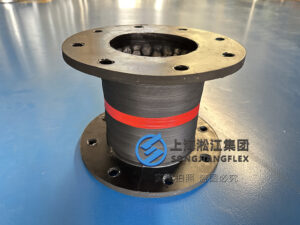
Unlike ordinary rubber connectors, high-pressure models are reinforced with multiple layers of high-strength synthetic fabric, steel wire reinforcement, and precision-molded rubber. External limit control rods are installed to prevent excessive axial extension caused by internal pressure or unexpected pipeline movement.
This combination allows the expansion joint to maintain excellent flexibility while providing additional mechanical protection under demanding operating conditions.
Typical construction includes:
- Premium EPDM, NBR, Neoprene, or FKM rubber
- High-strength nylon or polyester reinforcing fabric
- Steel wire reinforcement
- Carbon steel, stainless steel, or ductile iron flanges
- Adjustable galvanized or stainless steel limit rods
- Corrosion-resistant fasteners
Why Are Limit Control Rods Important?
Many pipeline failures occur not because the rubber body wears out, but because excessive movement exceeds its designed working range.
Limit control rods provide an additional layer of safety by:
- Restricting excessive axial extension
- Preventing over-stretching during pressure surges
- Reducing pipeline thrust forces
- Protecting pumps from excessive vibration
- Maintaining flange alignment
- Improving overall system stability
- Extending expansion joint service life
- Reducing maintenance frequency
For critical industrial installations, limit rods are considered one of the most effective methods of protecting flexible connectors.
Common Applications Across Industrial Equipment
High pressure rubber expansion joints are installed in a wide variety of industrial equipment and piping systems.
Pumping Equipment
- High-pressure centrifugal pumps
- Vertical inline pumps
- End suction pumps
- Split case pumps
- Fire pumps
- Booster pump sets
- Multistage water pumps
- Chemical dosing pumps
- Boiler feed pumps
- Cooling water circulation pumps
Industrial Process Equipment
- Pressure vessels
- Plate heat exchangers
- Shell & tube heat exchangers
- Industrial filtration systems
- Reverse osmosis skids
- Process reactors
- Chemical mixing systems
- Industrial compressors
- Vacuum systems
- Hydraulic equipment
HVAC & Building Mechanical Systems
- Chilled water systems
- Condenser water pipelines
- Cooling towers
- Air handling units
- Variable frequency pump systems
- District cooling plants
- Mechanical rooms
- Central utility plants
Municipal Infrastructure
- Water supply stations
- Wastewater treatment plants
- Desalination facilities
- Pumping stations
- Water transmission pipelines
- Irrigation systems
- Flood control pumping stations
Energy & Heavy Industry
- Thermal power stations
- Hydroelectric plants
- Nuclear auxiliary systems
- Steel manufacturing plants
- Mining slurry systems
- Cement production lines
- Paper mills
- Sugar factories
Major Performance Advantages
Excellent Vibration Isolation
The elastic rubber body absorbs vibration generated by pumps, compressors, and rotating machinery before it can travel through the piping network.
High Pressure Capability
Reinforced construction enables reliable performance under elevated operating pressures while maintaining flexibility.
Thermal Expansion Compensation
The expansion joint accommodates pipeline movement caused by heating and cooling cycles, reducing stress on connected equipment.
Noise Reduction
Rubber naturally dampens mechanical vibration, significantly lowering structure-borne noise inside industrial facilities.
Corrosion Resistance
Depending on the selected elastomer, the joint can withstand water, seawater, chemicals, oil, ozone, UV exposure, and outdoor weather conditions.
Choosing the Right Rubber Material
Selecting the correct elastomer is critical for long-term performance.
EPDM
Ideal for cooling water, drinking water, HVAC systems, municipal water treatment, and outdoor installations due to excellent weather, ozone, and heat resistance.
NBR
Recommended for diesel fuel, lubricating oil, hydraulic oil, petroleum products, and fuel transfer systems.
Neoprene (CR)
Suitable for marine cooling systems, offshore platforms, and outdoor industrial environments where weather resistance is important.
FKM (Viton®)
Designed for aggressive chemicals, high-temperature applications, solvents, and many industrial process fluids.
PTFE Lined Rubber Expansion Joint
Provides exceptional resistance to strong acids, alkalis, and highly corrosive chemical media while retaining the flexibility of the rubber body.
Installation Recommendations
Proper installation is essential to maximize service life.
Best practices include:
- Ensure accurate flange alignment before tightening bolts.
- Do not use the expansion joint to compensate for pipeline misalignment.
- Install limit rods according to the specified movement requirements.
- Avoid twisting the rubber body during installation.
- Support heavy pipelines with appropriate pipe hangers or supports.
- Perform regular inspections for bolt tightness and rubber condition.
- Replace damaged joints before leakage or structural failure occurs.
Correct installation significantly improves reliability and minimizes unexpected downtime.
SEO Semantic Keywords
Engineers and maintenance professionals frequently search using terms such as:
High Pressure Rubber Expansion Joint, Rubber Flexible Joint, Flexible Rubber Connector, Control Rod Expansion Joint, Limit Rod Rubber Joint, Heavy Duty Rubber Expansion Joint, Pump Expansion Joint, Industrial Rubber Bellows, Flexible Pipe Connector, Anti Vibration Expansion Joint, Water Pump Flexible Connector, HVAC Rubber Expansion Joint, Pipeline Expansion Joint, Rubber Bellows Connector, PTFE Lined Rubber Joint, Chemical Resistant Expansion Joint, Cooling Water Expansion Joint, Booster Pump Connector, High Pressure Flexible Connector, Industrial Vibration Isolation.
Including these technical keywords improves search visibility while matching the terminology used by procurement engineers and industrial buyers.
Frequently Asked Questions
Q1: Where are high pressure rubber expansion joints most commonly used?
They are widely used anywhere pipelines are exposed to pressure, vibration, or thermal movement. Common applications include pumping stations, HVAC systems, power plants, chemical processing facilities, water treatment plants, marine cooling systems, steel mills, mining operations, paper mills, food processing factories, pharmaceutical plants, and industrial utility piping. Their ability to reduce vibration and compensate for movement helps protect both equipment and infrastructure in demanding environments.
Q2: Can high pressure rubber expansion joints reduce water hammer?
Yes. While they are not a replacement for dedicated surge protection devices, the flexible rubber body absorbs part of the shock energy generated by rapid valve closures, pump startups, or sudden pressure changes. This helps reduce vibration, lowers stress on connected equipment, and minimizes the damaging effects of water hammer, particularly when combined with proper pipeline design.
Q3: Are stainless steel control rods available?
Absolutely. Depending on the installation environment, control rods can be manufactured from carbon steel with protective coatings or from stainless steel such as SS304 or SS316. Stainless steel versions are recommended for marine applications, outdoor installations, food processing, chemical plants, and any environment where corrosion resistance is essential.
Q4: How long can a high-quality rubber expansion joint last?
Service life depends on operating pressure, temperature, media, installation quality, and maintenance practices. Under appropriate operating conditions and with the correct rubber material, premium high-pressure rubber expansion joints can provide many years of reliable service. Regular inspections and proper installation further extend operational life and help prevent unexpected failures.
Contact Us
Shanghai Songjiang Vibration Absorber Co., Ltd. specializes in manufacturing high-performance rubber expansion joints, metal bellows, spring vibration isolators, rubber mounts, and complete vibration control solutions for industrial piping systems.
Our company’s new website is now live, featuring the latest product introductions.
For more details, please visit https://shsjflex.com/
Email: [email protected]
Our experienced engineering team can customize products according to your pipeline size, pressure rating, temperature, movement requirements, flange standards, and working media to ensure optimal performance for every application.