Rubber expansion joints are widely used in piping systems for their ability to absorb vibration, reduce noise, and compensate for misalignment. However, some users have encountered a serious issue during installation or operation—“pull-off” failure, where the rubber body is dislodged, causing leaks, flange detachment, or even pipeline damage. What causes this issue, and how can it be avoided?
What is the “Pull-Off” Phenomenon?
“Pull-off” refers to the condition where the rubber body of the expansion joint is partially or fully pulled out from between the flanges due to internal pressure or improper installation. This results in a complete loss of sealing and can lead to system failure, equipment downtime, or safety risks.
Main Causes of the Pull-Off Problem
According to the technical analysis by our engineering team at Shanghai Songjiang Shock Absorber Group Co., Ltd., the pull-off phenomenon is usually caused by the following:
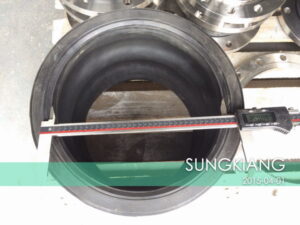
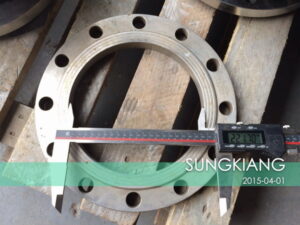
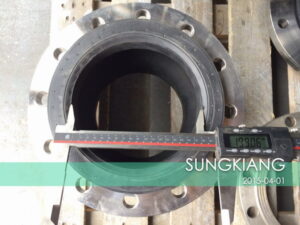
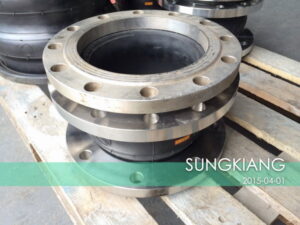
1. Flange Inner Diameter Too Large
Mismatched flange sizes are the most common cause.
For example:
-
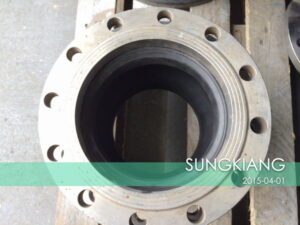
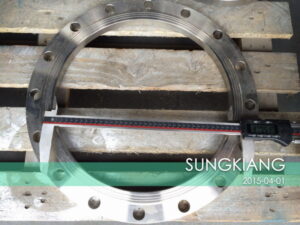
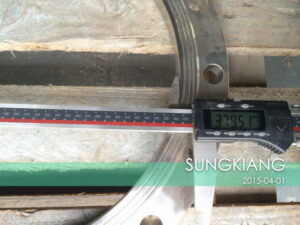
A DN200-PN16 flat welding flange has a significantly larger inner diameter than a DN200 rubber expansion joint;
-
The same issue occurs with a DN350 flat welding flange paired with a DN350 double-sphere rubber joint.
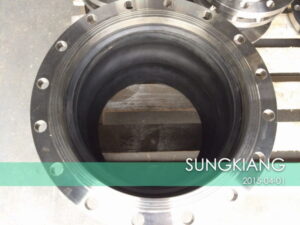
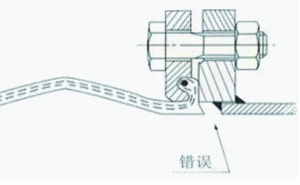
Although the outer diameter, thickness, bolt hole number, and hole size are identical, the flange’s inner diameter is larger, meaning it only presses down on part of the rubber sealing surface. If the installation is not well-aligned, the pressure from the pipeline can easily cause the rubber to pull off.
2. Misalignment During Installation
If the rubber joint is not centered properly during installation, or the flanges are tightened unevenly, the sealing surface will experience unbalanced pressure—again increasing the likelihood of pull-off and leakage.
3. Use of Improper Flange Types
Many installations still use standard flat welding flanges, which are not designed for soft-seal connections. These flanges cannot provide a full and secure seal with rubber joints, leading to insufficient compression and sealing area.
Recommended Solution: Use Butterfly Valve Soft-Seal Flanges
To effectively prevent pull-off failures, we highly recommend using butterfly valve soft-seal dedicated flanges. These flanges offer the following benefits:
-
Precisely matched inner diameter to the rubber joint;
-
Flat and smooth sealing surface, maximizing contact with the rubber joint;
-
Uniform pressure distribution during tightening, reducing the risk of leakage and pull-off.
Installation Best Practices
-
Always verify that the flange’s inner diameter matches the rubber joint;
-
Tighten flange bolts in a cross pattern to distribute force evenly;
-
Consider using limit rod devices for high-pressure systems to prevent overextension;
-
Choose factory-recommended flanges designed specifically for rubber joints.
Conclusion
The root cause of pull-off failure is not the rubber joint itself, but rather mismatched flanges and improper installation. Rubber expansion joints are mature and reliable products, capable of excellent sealing and flexibility—when paired with the correct flange and installed correctly. Paying close attention to these technical details ensures the full performance and lifespan of the product.
For more technical details, installation support, or product consultation, feel free to contact:
Shanghai Songjiang Shock Absorber Group Co., Ltd. – Technical Support Department
📧 Email: [email protected]
🌐 Website: www.shsjflex.com
📱 WhatsApp: +86 13032112360