Introduction
Pipeline vibration, pressure fluctuations, and thermal expansion often cause stress in industrial piping systems. Rubber expansion joints provide a flexible solution to protect pipelines and connected equipment.
Quick Answer
Rubber expansion joints are flexible connectors installed in pipelines to absorb vibration, compensate thermal expansion, and reduce mechanical stress. They help improve system reliability and extend equipment service life.
Transition
Understanding their design, manufacturing process, and applications explains why they are widely used in modern industries.
What Is a Rubber Expansion Joint?
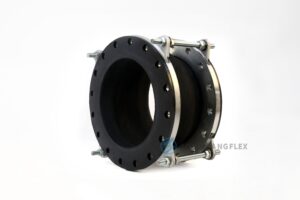
A rubber expansion joint is a flexible connector installed between two pipeline flanges. It is typically constructed from high-quality rubber combined with reinforced fabric layers and steel components.
This design allows the joint to absorb axial, lateral, and angular movements while maintaining a reliable seal. Rubber expansion joints are widely used to reduce vibration, control noise, and compensate for thermal expansion in piping systems.
Why Do Pipeline Systems Require Rubber Expansion Joints?
Industrial pipelines operate under challenging conditions such as vibration, pressure variations, and temperature changes. These factors can create stress that may damage pipes, pumps, and valves.
Rubber expansion joints help solve these problems by providing flexibility within the pipeline system. They absorb movement and vibration, reducing the risk of structural damage and improving the overall stability of the system.
Manufacturing Advantages of Professional Expansion Joint Factories
Reliable rubber expansion joint manufacturers use advanced production technologies and strict quality control processes.
Modern factories are capable of producing expansion joints in a wide range of sizes and materials. Many manufacturers also provide engineering support to ensure the product matches the specific requirements of each pipeline system.
These manufacturing capabilities ensure consistent product performance and long service life.
OEM and ODM Customization Capabilities
Different engineering projects require different pipeline solutions. As a result, customization has become an important service in the expansion joint industry.
Professional manufacturers can provide OEM and ODM services such as:
-
Customized diameters and lengths
-
Different rubber materials for various media
-
Special pressure ratings
-
Project-specific design solutions
These customization options allow engineers to select the most suitable expansion joint for their system.
Large-Diameter Rubber Expansion Joints for Heavy-Duty Applications
With the development of large industrial facilities, the demand for large-diameter expansion joints has increased significantly.
High-capacity manufacturing plants can produce rubber expansion joints with diameters of up to 5 meters. These products are commonly used in power plants, water treatment facilities, chemical processing systems, and large infrastructure projects.
Their flexible structure helps manage movement and vibration in large pipeline systems.
Key Performance Advantages of High-Quality Rubber Expansion Joints
High-quality rubber expansion joints provide several important benefits:
-
Excellent vibration absorption
-
Effective noise reduction
-
Strong corrosion resistance
-
Long-term aging resistance
-
Reliable performance in high-pressure systems
These features make them essential components in modern industrial piping systems.
Conclusion
Rubber expansion joints play a critical role in protecting industrial pipelines. With advanced manufacturing technology and customization capabilities, professional manufacturers provide reliable solutions for complex piping systems.